Whether you are a student, working a regular job, or running a busy home, you do not need special connections to build wealth. For hundreds of years, the stock market has been driven by basic human emotions like greed, fear, and the search for a good deal.
That is why the best investing books are written by real investors who risked their own money, not college professors. These classics skip the confusing math. Instead, they teach you how to find a strong company, figure out what it is worth, and let your money grow over time while you ignore the daily noise.
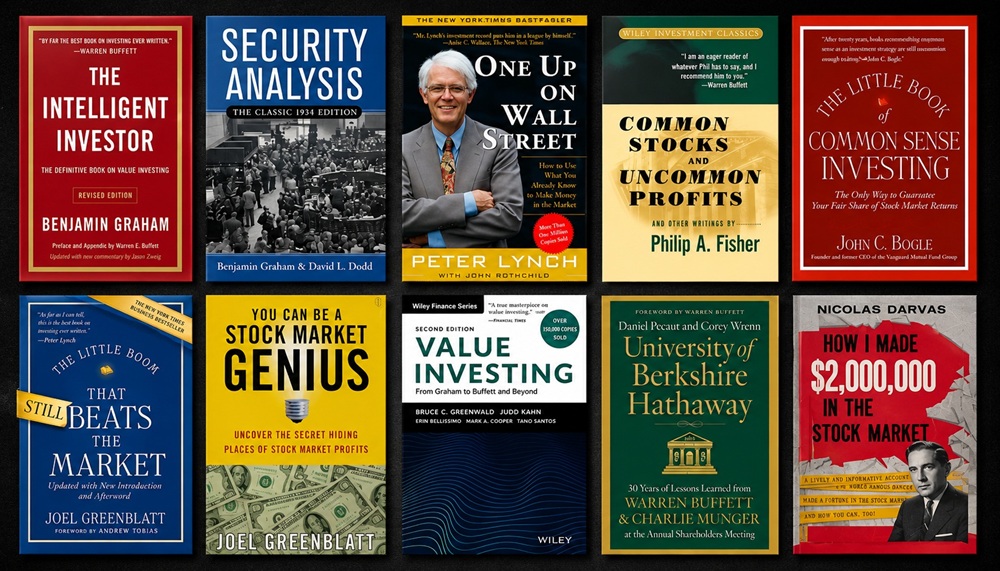
1. The Intelligent Investor by Benjamin Graham
First Published: 1949
Considered the bible of value investing, this classic focuses on protecting your wealth. Graham’s core concept is the “Margin of Safety” buying stocks for less than their actual worth to minimize risk. He uses a fictional character, “Mr. Market,” to show how to profit from market panic rather than giving into it. Warren Buffett calls it the best investing book ever written.
Tip: Get the version with Jason Zweig’s commentary to avoid the dry 1940s data.
2. Security Analysis by Benjamin Graham and David Dodd
First Published: 1934
Written during the Great Depression, this book launched modern stock analysis. It is more technical than The Intelligent Investor, but it teaches you how to truly read financial statements to find a company’s real worth. The core lesson is learning how to analyze stocks and bonds deeply so you can protect your cash from total loss. This is an essential read for anyone who wants to move past the basics and analyze businesses like a professional.
3. One Up On Wall Street by Peter Lynch
First Published: 1989
Peter Lynch ran Fidelity’s Magellan Fund and made history by delivering huge 29% annual returns. His main idea is simple: you can beat the professionals by investing in what you already know. Lynch explains how to spot great, growing companies just by paying attention to the products and services you use in your daily life as a consumer. It removes the mystery from stock picking and proves that regular common sense is often better than complex math models.
4. Common Stocks and Uncommon Profits by Philip A. Fisher
First Published: 1958
Philip Fisher is the pioneer of growth investing. Instead of just looking at balance sheets, he teaches you how to study a company’s quality, management, and long-term potential. His famous “scuttlebutt” method involves gathering real clues about a business by talking to its employees, customers, and competitors. Warren Buffett famously combined Fisher’s growth ideas with Graham’s value rules. This book is perfect for learning how to find high-quality companies that can grow your money for decades.
5. The Little Book of Common Sense Investing by John C. Bogle
First Published: 2007
Written by the founder of Vanguard, this book proves that low-cost index funds are the safest and easiest way for regular people to build wealth. Bogle explains how expensive fund managers and high fees quietly steal your long-term profits. Instead of trying to beat the market, he shows you how to simply own the whole market. It is the ultimate guide for busy people who want a simple, highly effective strategy they can set and forget.
6.The Little Book That Still Beats the Market by Joel Greenblatt
First Published: 2005
Joel Greenblatt, a highly successful fund manager, shares a simple “Magic Formula” to help you build wealth. The formula uses basic math to find high-quality companies that are selling for bargain prices. By sticking to this strict, step-by-step system, he shows how anyone can beat the overall stock market. The book is short, fun to read, and perfect for investors who want a clear, practical strategy without any guesswork.
7. You Can Be a Stock Market Genius by Joel Greenblatt
First Published: 1997
In this book, Greenblatt shows you how to find hidden profits in “special situations” like corporate spin-offs, mergers, and bankruptcies. These are unusual events where big institutional investors legally cannot buy the shares, creating massive bargains for regular investors. While the title sounds like a gimmick, the content is pure gold. It gives you the exact tools to find lucrative, overlooked opportunities that Wall Street completely ignores.
8. Value Investing: From Graham to Buffett and Beyond by Bruce C. Greenwald et al.
First Published: 2001
This book bridges the gap between old-school principles and modern markets. Greenwald explains how to calculate a company’s true value and evaluate its competitive advantages. By profiling master investors like Warren Buffett, the book shows exactly how value investing succeeds across different market cycles. It is the perfect read for anyone who wants a clear, updated look at how classic theories apply to the modern business world.
9. University of Berkshire Hathaway by Daniel Pecaut and Corey Wrenn
First Published: 2017
This book distills over thirty years of wisdom from Warren Buffett and Charlie Munger’s famous annual shareholder meetings. It acts as a masterclass in clear thinking, business ethics, and long-term investing. Instead of complex math, it focuses on the mindset required to make smart decisions and let your money compound over decades. It is an invaluable read for anyone who wants to think like the two greatest investors in history.
10. How I Made $2,000,000 in the Stock Market by Nicolas Darvas
First Published: 1960
This is the fascinating, true story of a world class dancer who taught himself how to trade stocks. Operating entirely away from Wall Street, Darvas created a unique method using price action and visual “boxes” to spot stock trends. His success proves that you do not need an industry background to make a fortune; you just need absolute dedication, a systematic approach, and strict risk rules to cut your losses early.

Afshi Speaks is a general interest blog dedicated to exploring the stories, ideas, and topics that shape our world. Our team researches and writes across a wide range of subjects to bring curious readers honest, informative, and engaging content.


Leave a Reply