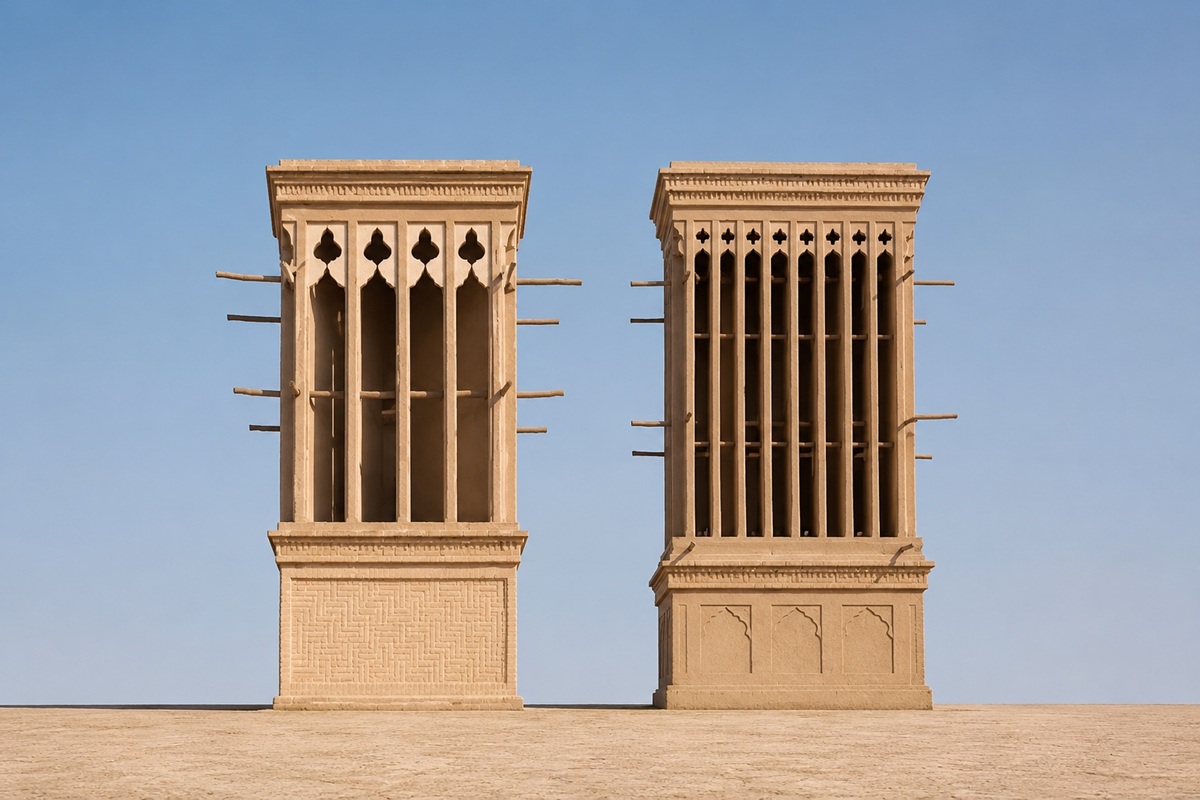
Long before electricity, people living in the world’s harshest deserts figured out how to stay cool. They built wind catchers tall, chimney-like architectural marvels that sit on rooftops to trap passing breezes. Developed around 3,000 years ago, these structures channel refreshing air directly into homes, dropping indoor temperatures by 8 to 12 degrees Celsius. It stands as one of history’s smartest, zero-emission engineering feats.
A Global Solution with Local Names
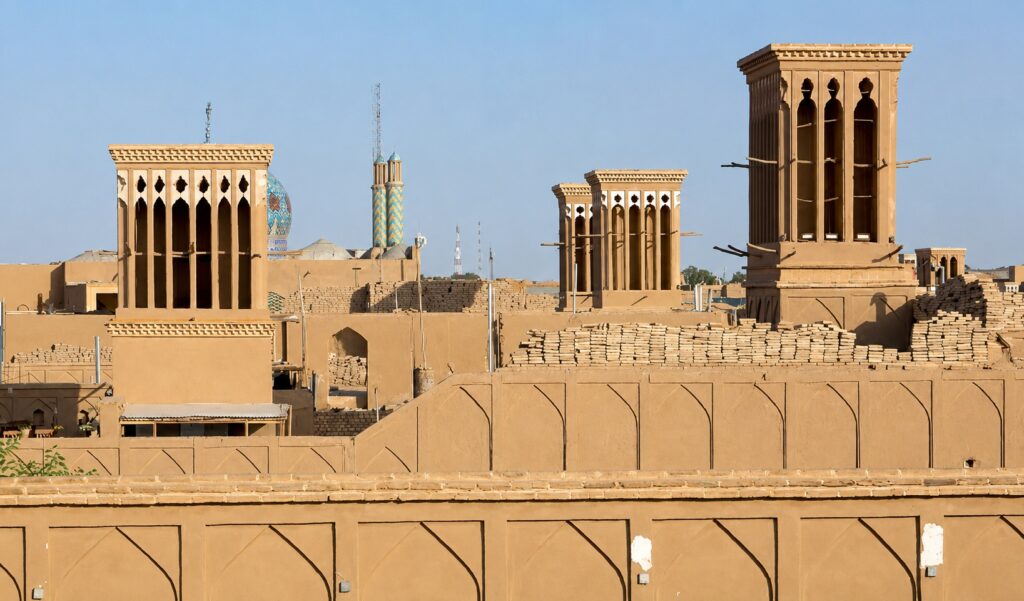
While these towers are a staple of ancient desert survival, different cultures perfected their own versions over centuries. In Iran, they are called badgirs. The UNESCO World Heritage city of Yazd is famous for them, featuring massive 30-meter-tall towers that have stood since the 14th century.
Further south in the Arabian Gulf, countries like the UAE and Qatar developed the barjeel to catch coastal winds. Meanwhile, in Egypt and the Sahara, builders created the malqaf a shorter, triangular version designed to scoop up wind blowing from one reliable direction.
How Wind Catcher Towers Work
To understand how these towers work, it helps to look at the illustration below. Instead of using electricity, the system relies entirely on basic physics specifically, wind pressure, temperature shifts, and the cooling power of water.
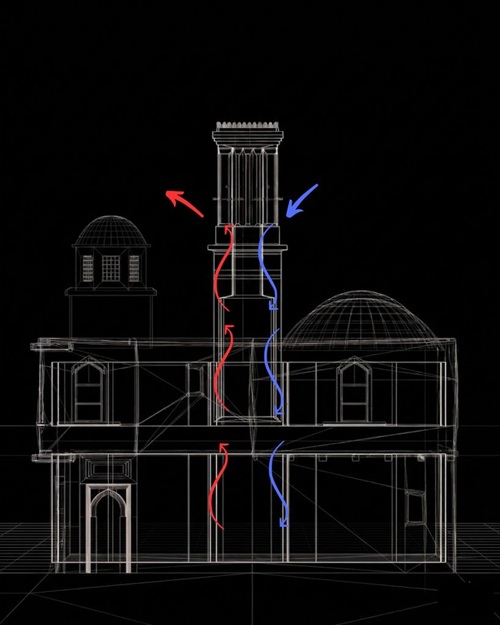
First, the top of the tower features open vents designed to trap high-altitude breezes, which are naturally cooler and less dusty than air at ground level. The tower forces this fresh breeze downward into the home’s living areas.
At the same time, the system uses the “stack effect.” Since warm air naturally rises, the hot air inside the house travels upward and escapes out of the opposite side of the tower. This creates a continuous loop, constantly pulling fresh air in and pushing stale heat out.
To make the air even colder, ancient engineers often routed the incoming breeze over indoor fountains, pools, or underground water channels called qanats. The dry desert air absorbs moisture from the water, which causes the temperature to plummet instantly. Finally, at night, the tower draws in the chilly desert air to cool down the thick mud-brick walls, prepping the entire house to withstand the heat of the following day.
Engineering Variations Across Deserts
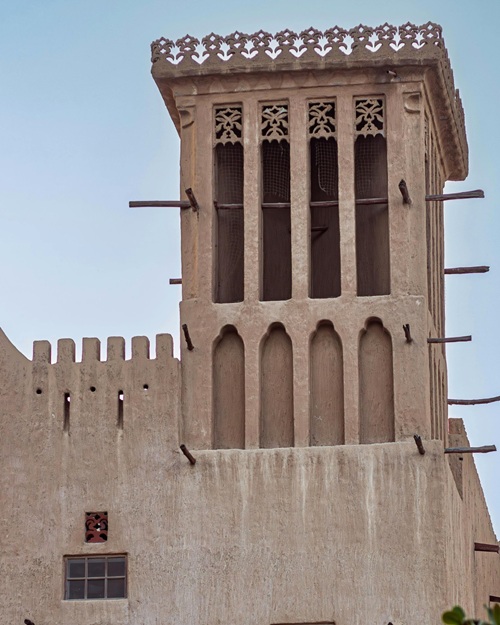
While the physics remains the same, builders adapted the architecture to local weather.
In Iran, the classic badgir is a tall, multi-sided tower built to catch shifting winds from any direction, using internal walls to separate incoming cool air from outgoing hot air. In Egypt, the malqaf is a shorter, one-directional scoop tailored to predictable wind patterns, often built in pairs to balance airflow. In the Arabian Gulf, the barjeel was modified to fit tight courtyard homes and maximize coastal breezes.
No matter the shape, builders used local mud-brick and adobe, which acted as excellent natural insulation against the daytime heat.
Modern Relevance
In an era of rising energy costs and climate change, these ancient structures are inspiring a new wave of sustainable architecture. Modern eco-cities, like Masdar City in the UAE, are adapting these exact ventilation principles for 21st-century buildings. Because they are silent, require zero electricity, and work perfectly during power outages, they offer a reliable alternative to modern air conditioning.
Ultimately, these towers prove that low-tech, clever design can solve massive environmental challenges. By reviving these ancient concepts, today’s architects can build a more resilient, eco-friendly future.

Afshi Speaks is a general interest blog dedicated to exploring the stories, ideas, and topics that shape our world. Our team researches and writes across a wide range of subjects to bring curious readers honest, informative, and engaging content.

Leave a Reply