How Thor Heyerdahl sailed the Kon-Tiki raft across the Pacific in 1947

In 1947, a Norwegian explorer and researcher named Thor Heyerdahl set out on one of the most daring adventures of the 20th century. Along with a small, brave crew, he sailed a primitive raft made of balsa wood named the Kon-Tiki across the vast Pacific Ocean. Starting from Callao, Peru, they traveled roughly 4,300 miles (6,900 km) before finally reaching the Tuamotu Islands in French Polynesia.
Heyerdahl wasn’t just looking for adventure; he had a specific goal. He wanted to prove that ancient South Americans from the pre-Incan era could have traveled across the sea to settle in Polynesia, using nothing more than simple technology and the natural flow of ocean currents.
Building the Raft: A Lesson from the Past
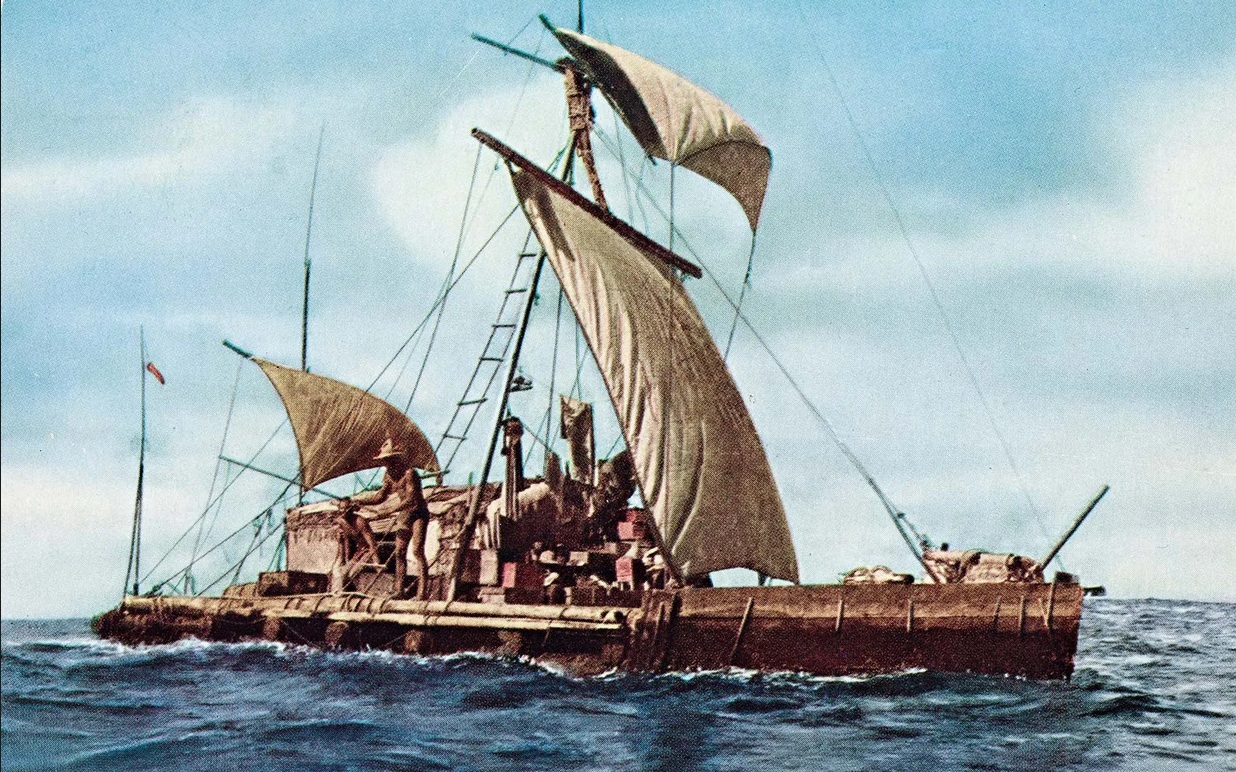
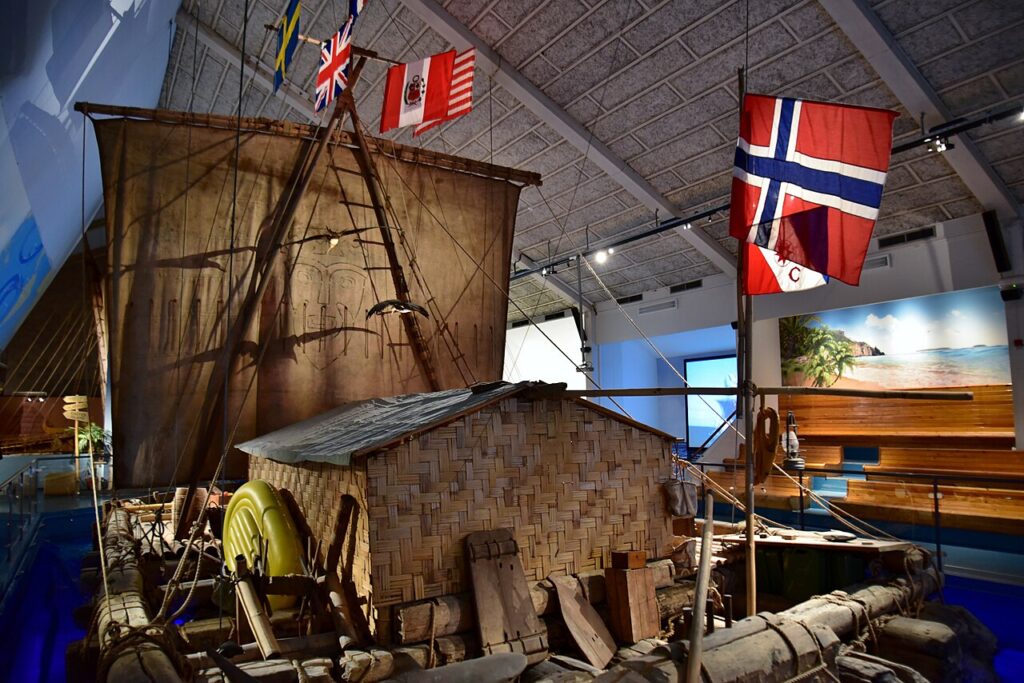
To keep the experiment authentic, the Kon-Tiki was built almost exactly like the rafts shown in ancient South American art and historical records. It was made of nine massive balsa-wood logs a material chosen for being incredibly lightweight and buoyant. The crew held everything together using only hemp ropes; they didn’t use a single nail, piece of metal, or modern fastener. For a little bit of protection from the elements, they added a small cabin made of bamboo. The raft was named after the Inca sun god, Viracocha (also called Kon-Tiki), a legendary figure who was said to have sailed into the sunset long ago.
At the time, many experts were convinced the mission was a suicide attempt. They warned that the porous balsa wood would soak up water and sink within weeks, or that the rough ocean waves would cause the logs to rub together and saw right through the ropes. Heyerdahl proved the skeptics wrong. Instead of fighting the ocean like a heavy modern boat, the Kon-Tiki rode high on the waves, proving to be surprisingly sturdy and seaworthy throughout the journey.
The Crew: Six Men and a Parrot
Thor Heyerdahl didn’t take on this massive ocean alone. He was joined by five other men from different backgrounds, each bringing a unique skill to the raft:
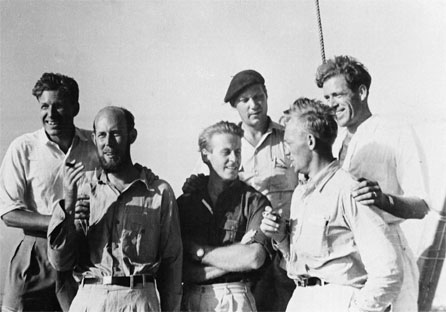
- Herman Watzinger: An engineer who served as the second-in-command.
- Erik Hesselberg: The artist who painted the Kon-Tiki face on the sail and served as the navigator.
- Knut Haugland and Torstein Raaby: Both were radio experts and war heroes who had served in the resistance during WWII.
- Bengt Danielsson: A Swedish anthropologist who clearly valued his downtime he brought over 70 books to read during the trip!
To keep them company, they even brought along a pet parrot. Life on the raft was a true test of survival. The crew lived mostly off the land or rather, the sea eating fish they caught along the way. In fact, flying fish would often land right on the deck of the raft at night, providing an easy breakfast. They supplemented their diet with coconuts and collected rainwater to drink. Guided by the stars, the wind, and the natural currents, they stayed on course using only the most basic navigation tools.
Life and Danger on the Open Ocean
The 101-day journey was anything but peaceful. Living just inches above the water, the crew found themselves in the middle of a wild, underwater world. Huge whales swam alongside the raft, and sharks were a constant presence the men even had to occasionally wrestle them away from the logs. At night, strange, glowing “round heads” (possibly giant squids) would stare up at them from the dark depths. They even spotted a rare fish called the Gempylus, which scientists at the time believed had been extinct for ages.
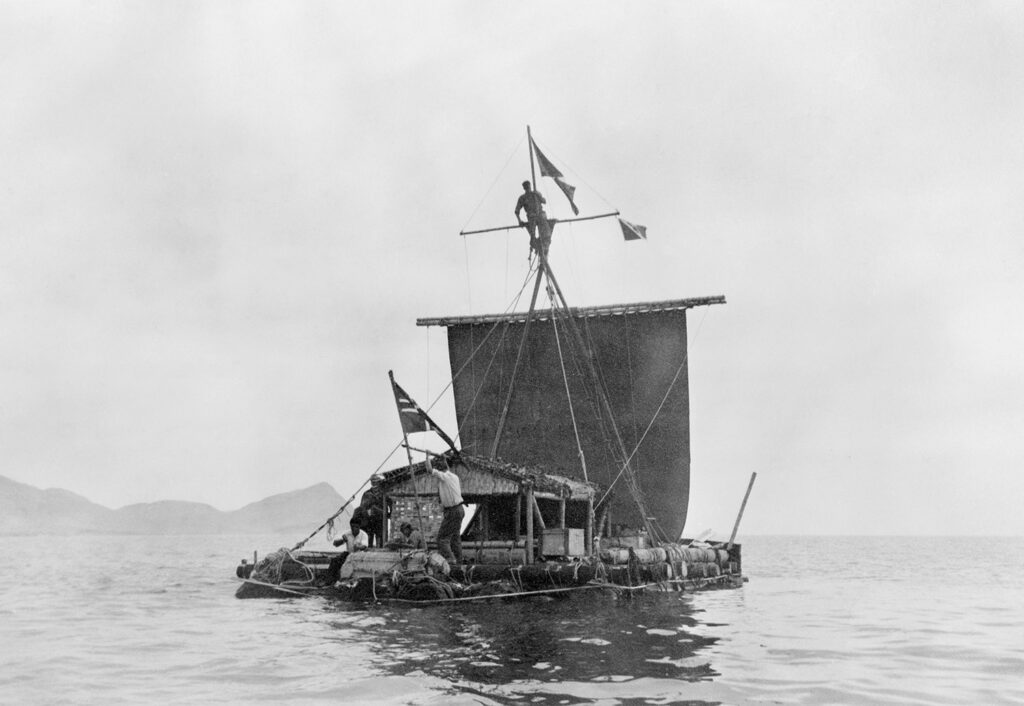
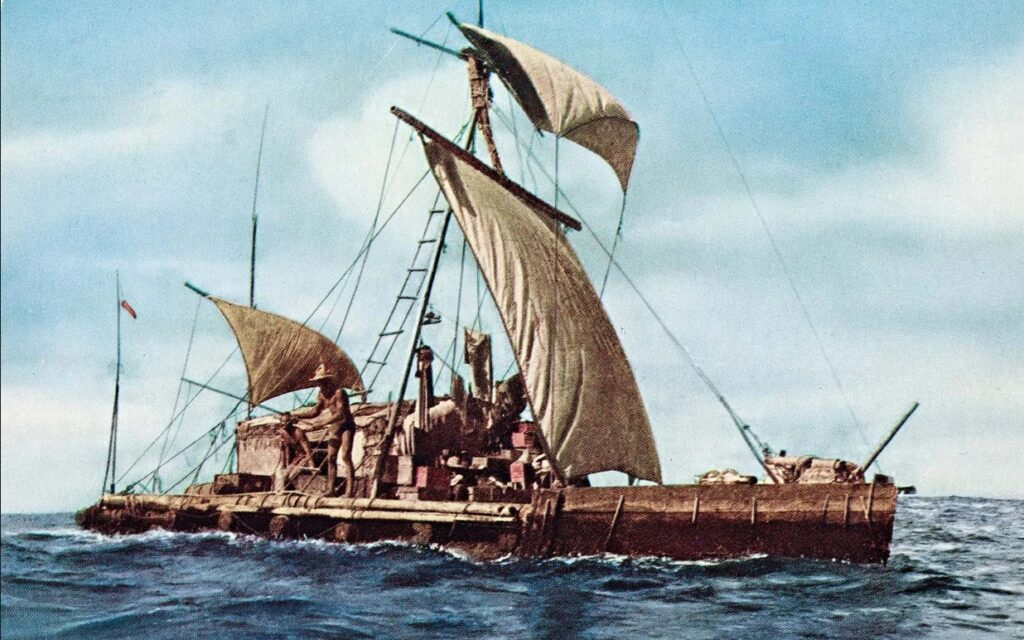
The weather was just as intense. Massive storms sent waves crashing over the deck, and at one point, a crew member nearly fell through the gaps between the shifting logs. Interestingly, the very thing experts feared the raft’s flexibility is what saved them. Because the logs were lashed with rope instead of being rigid, the raft could bend and move with the ocean’s power rather than being snapped in half by it.
Relying entirely on the wind and the Humboldt Current, the Kon-Tiki finally reached its destination on August 7, 1947. The voyage ended with a literal bang when the raft crashed into a coral reef at Raroia in the Tuamotu Islands. Despite the wreck, all six men made it safely to shore, where they were eventually welcomed by local Polynesians, proving that the impossible journey could indeed be done.
Important Facts & Figures
Beyond the adventure itself, the expedition produced some astonishing figures and discoveries.
- The Weight of the Raft: The nine balsa logs weighed approximately 15 tons when dry.
- The Radio’s Role: While you mentioned the radio experts, it’s worth noting they used a small 7-watt transmitter to maintain contact with amateur radio operators in the U.S. and Norway. This was a lifeline that proved they were still afloat.
- The “Extinct” Fish: The fish mentioned is specifically the Snake Mackerel (Gempylus serpens). Finding it alive was a genuine scientific contribution of the trip.
- Diet Detail: They didn’t just eat what they caught; they also carried 200 coconuts, sweet potatoes, and gourds, which were the types of food ancient travelers would have actually carried.
- Modern DNA Context: To be balanced, you might mention that while Heyerdahl proved the trip was possible, modern DNA testing has shown that Polynesians primarily have East Asian ancestry, though there is evidence of some small genetic contact with South Americans around 1200 AD.
Books and Films
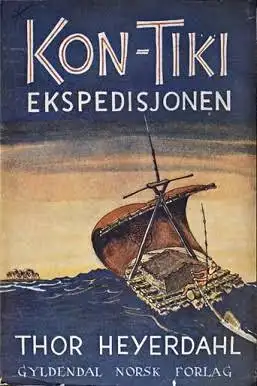
- The Book: Heyerdahl wrote a book about the journey called The Kon-Tiki Expedition. It became a massive international bestseller and was translated into more than 60 languages.
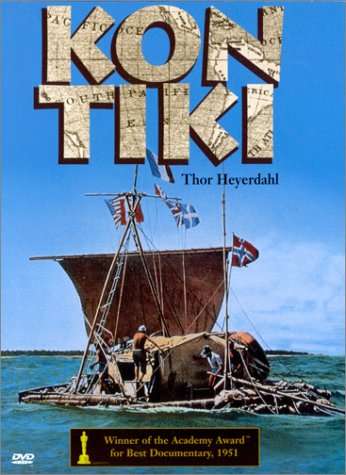
- The Documentary: The 16mm footage the crew shot during the trip was made into a documentary in 1950, which won the Academy Award for Best Documentary Feature.
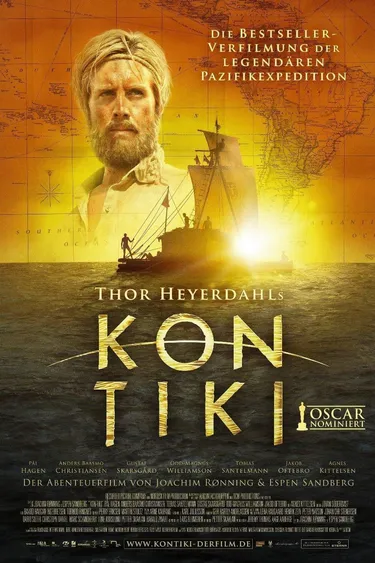
- The Movie: In 2012, a Norwegian feature film called Kon-Tiki was made to dramatize the story. It was a huge critical success and was nominated for an Academy Award in 2013.

Afshi Speaks is a general interest blog dedicated to exploring the stories, ideas, and topics that shape our world. Our team researches and writes across a wide range of subjects to bring curious readers honest, informative, and engaging content.


Leave a Reply