
For decades, the big global worry was a “population explosion.” But today, a very different story is unfolding. While the total number of people on Earth is still rising, the speed at which we are growing has drastically slowed down.
In the 1960s, the global population growth rate was cooking at over 2% a year. Today, it has coasted down to less than 1%. Across almost every continent from Europe and Asia to the Americas the story is the same: people are simply having fewer babies.
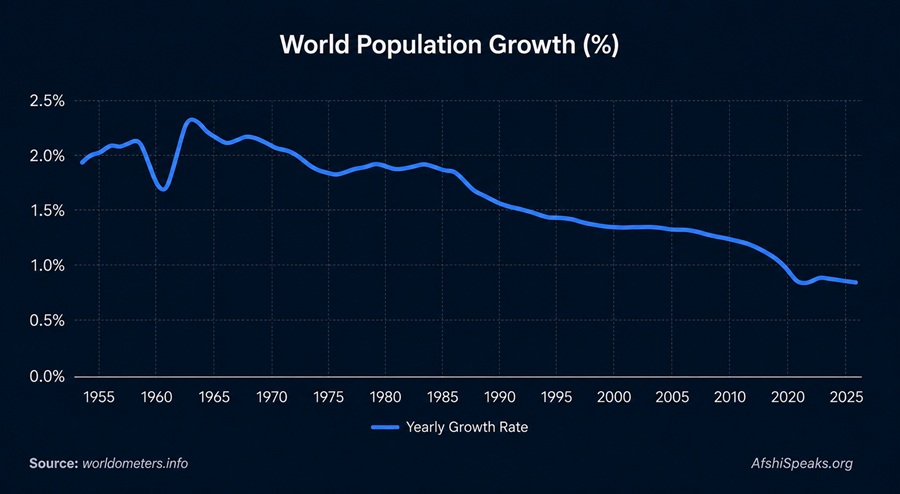
While traditional economic factors play a huge role, recent global research has highlighted an unexpected, modern culprit: the sudden rise of smartphones and high-speed internet. Here is a look at what is driving the great global cooldown.
1. The Smartphone Shock: Less In-Person Connection
It sounds like a sci-fi plot, but recent global analyses show a fascinating link: the rapid rise of modern technologies over the last decade including smartphones, social media, streaming platforms, home Wi-Fi, 4G, and now ultra-fast 5G networks has coincided with a noticeable decline in birth rates around the world.
Think about how we spend our evenings now. Decades ago, winding down meant socializing, going out, or spending undistracted time with a partner. Today, we log off from work only to log onto our personal devices. With non-stop connectivity everywhere we go, time spent on screens is replacing real-world relationship formation. Studies show that birth rates began falling first in the exact regions that got high-speed internet access earliest. Put simply, our digital lives are pushing dating, marriage, and family-making to the back burner.
2. The Biological Shift: Falling Fertility Rates
Beyond our lifestyle choices, there is also a major biological shift happening: actual fertility rates are dropping. Globally, the average number of children a woman has in her lifetime has plummeted from around five in the 1960s to just over two today.
Part of this is due to lifestyle since people are waiting much longer to get married and start families, they are trying to conceive at ages when fertility naturally begins to decline. However, researchers are also looking into environmental factors, modern diets, stress, and sedentary lifestyles, which are affecting reproductive health for both men and women. It is not just that people are choosing smaller families; for many, conceiving has genuinely become more difficult.
3. Cost of Modern Life
Of course, our devices aren’t the only thing keeping cribs empty. Economic pressures are a massive hurdle for young couples.
Years ago, if you lived on a farm, having a large family meant extra hands to help with the harvest. Children were an economic asset. Today, as the world packs into cities, children are a major financial commitment. From skyrocketing housing prices and childcare fees to the sheer cost of everyday living, many young couples realize that a large family simply isn’t feasible.
4. School, Careers, and Choices for Women
Another major driver of this shift is a positive one: the rise of women’s education and independence.
Today, more women around the world are pursuing higher education and building careers. When you spend your twenties focusing on personal growth and financial stability, marriage and childbearing get pushed back. Combined with widespread access to reliable family planning, having a child has shifted from a societal inevitability to a highly deliberate personal choice.
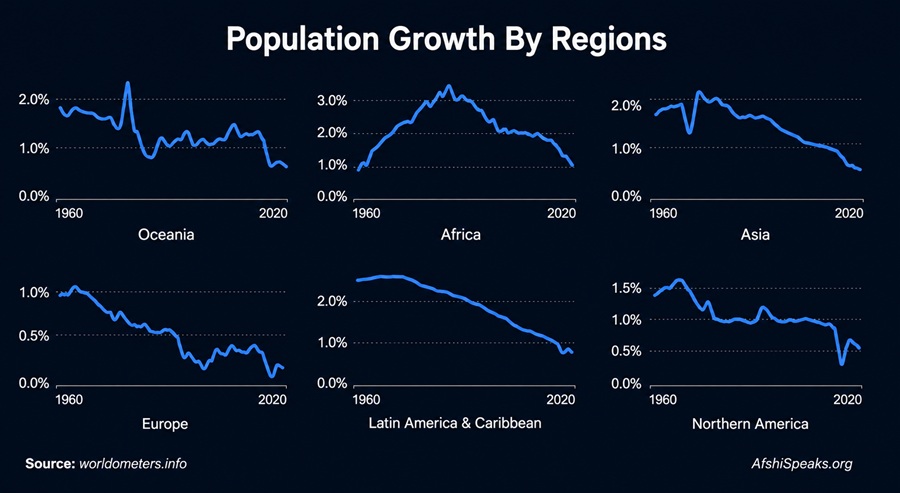
What Comes Next?
A slowing population growth rate isn’t a disaster, but it does mean a completely different world. We are moving toward an “aging society,” meaning fewer young workers will be around to support retiring generations, putting a strain on healthcare and pensions. On the bright side, fewer people means less immediate pressure on our planet’s environment and resources.
Ultimately, the falling birth rate is a reflection of a highly connected, urbanized world. We aren’t running out of people anytime soon we’re just learning to live a little differently.

Afshi Speaks is a general interest blog dedicated to exploring the stories, ideas, and topics that shape our world. Our team researches and writes across a wide range of subjects to bring curious readers honest, informative, and engaging content.


Leave a Reply