
Artemis II: A New Mission Around the Moon (April 2026)
More than 50 years after the Apollo missions ended, NASA’s Artemis II mission sent four astronauts on a trip around the Moon. It was the first time humans traveled beyond low Earth orbit since 1972, when Apollo 17 flew.
The mission tested NASA’s Orion spacecraft in deep space and worked well. It’s an important step toward long-term missions to the Moon and, one day, sending people to Mars.
The Mission Timeline: How it Went Down
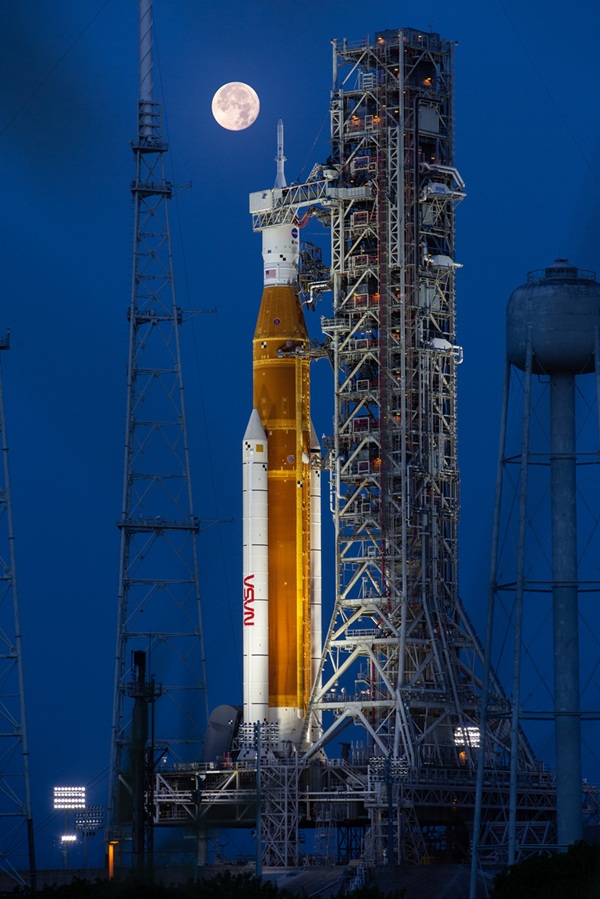
- The Big Launch: April 1, 2026
The mission kicked off on the evening of April 1st. The crew took off from Florida’s Kennedy Space Center on the massive SLS rocket. They even gave their Orion spacecraft a name: Integrity. - The Trip Out
For the first few days, the crew stayed busy. They spent their time checking all the ship’s systems to make sure everything was running smoothly as they headed toward the Moon. - Saying Hi to the Moon: April 6, 2026
This was the big moment. The ship looped around the far side of the Moon, getting within about 4,000 miles of the surface. During this flyby, the crew actually broke the record for the farthest humans have ever traveled from Earth. - Coming Home: April 10, 2026
After a 10-day trip, the mission ended safely when the capsule splashed down in the Pacific Ocean. Everything worked exactly as planned.
The Crew
The mission was a team effort between the U.S. and Canada, featuring a crew of four:

- Reid Wiseman (Commander): Led the mission for NASA.
- Victor Glover (Pilot): Handled the flying duties for NASA.
- Christina Koch (Mission Specialist): Made history as the first woman to ever fly to the Moon.
- Jeremy Hansen (Mission Specialist): Represented the Canadian Space Agency.
This group wasn’t just a random pick; they represent a new chapter where different countries work together to explore deep space.
How the Flight Worked
The mission took the astronauts around the Moon on a path that would automatically bring them back to Earth. Some key moments were:
- They traveled farther from Earth than the Apollo 13 mission.
- At the farthest point, they were about 406,000 km away from Earth.
- The whole trip covered a huge distance, with the crew spending about a week in deep space.
The spacecraft did not go into orbit around the Moon. Instead, it flew past it and used the Moon’s gravity to turn around and head back to Earth.
Purpose of the Mission
Artemis II was an important test flight with astronauts on board. It checked how well the Orion spacecraft and rocket systems work in deep space. The main goals were:
- To test life support, engines, the heat shield, and other systems with a real crew.
- To practice what will be needed for future missions like Artemis III, which aims to land on the Moon.
- To collect information about how astronauts perform, how much radiation they face, and how the spacecraft behaves far from Earth.
- To gain experience for longer space missions in the future.
This mission followed the earlier Artemis I test, which had no crew, and helps prepare for astronauts landing on the Moon again later this decade.
What They Saw and Experienced
During the trip, especially in the 7 hours around the Moon, the crew saw some amazing things:
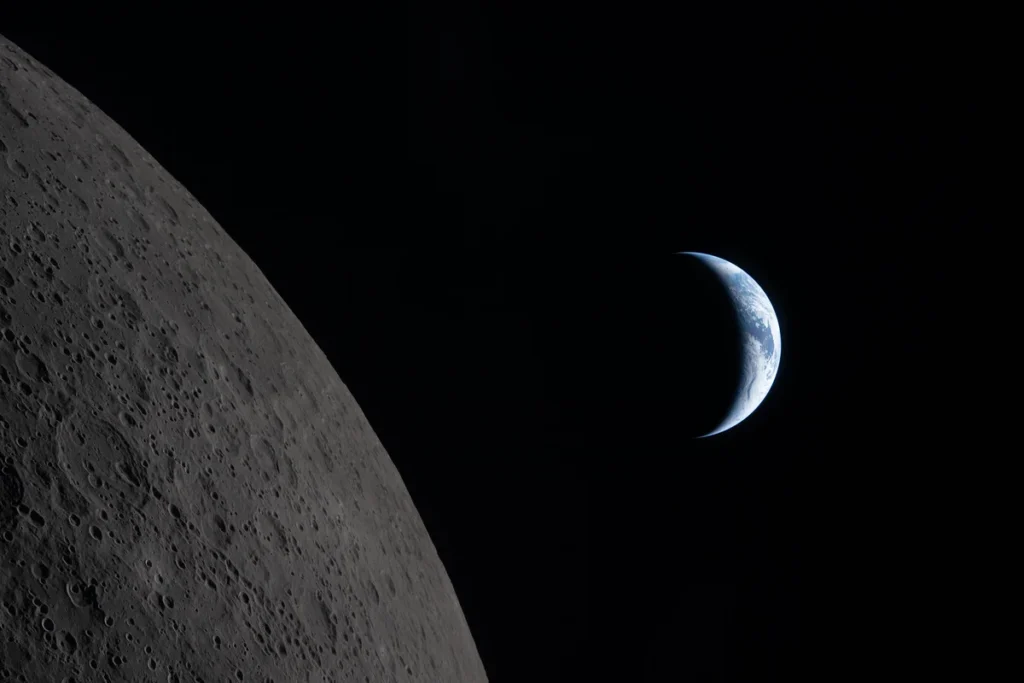
- Far Side of the Moon: For the first time in over 50 years, humans saw the Moon’s far side up close. They looked at craters, mountains, and other features using much better cameras than before.
- Earthrise: They watched Earth appear above the Moon’s horizon as they came out from behind it.
- Solar Eclipse from Space: They saw the Sun partly hidden by the Moon, creating a rare view.
- Close Views: At the closest point, they were just over 6,500 km from the Moon, giving them very clear views.
The astronauts said the experience was unforgettable. They had small moments of celebration and also took time to think about Earth and space. They carried out science work, handled the spacecraft, and shared updates when they could.
There was also a planned loss of communication while they were behind the Moon.


Significance and Aftermath
Artemis II proved that the Orion spacecraft is ready for deep space and showed what countries can achieve when they work together. Since returning, the crew has been celebrated worldwide for their record-breaking journey.
The Big Picture:
- A Historic Path: This success clears the way for the next mission to actually land humans on the Moon.
- The “Spark”: It got the whole world excited about space again, reminding us that we’re finally moving beyond Earth’s backyard.
- A Bridge to the Stars: This wasn’t just a flight it’s the first step toward living on the Moon and eventually reaching Mars.
Even though the trip lasted only about 10 days, it renewed worldwide interest in space travel. It also reminded people that after more than 50 years, humans are once again going back toward the Moon, with bigger goals ahead.

Afshi Speaks is a general interest blog dedicated to exploring the stories, ideas, and topics that shape our world. Our team researches and writes across a wide range of subjects to bring curious readers honest, informative, and engaging content.


Leave a Reply