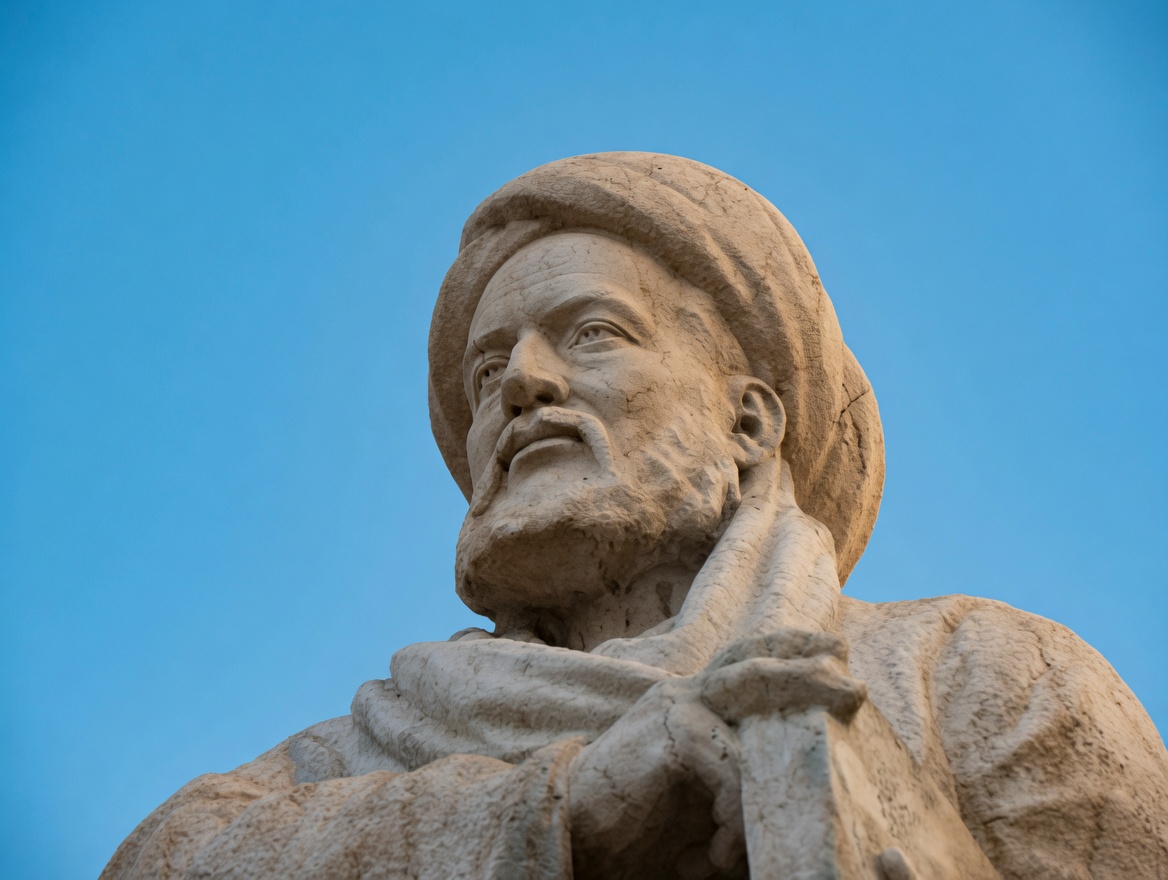
Ibn Sina (Avicenna) The Rise of a Scholar and Physician
In the 10th century a young man named Ibn Sina (known as Avicenna in Europe) lived in a busy part of Central Asia. Even as a teenager, he was incredibly smart. One of the most famous stories about him is true: he cured a very sick king when older doctors couldn’t. As a reward, he was allowed to use the king’s private library. This library was one of the best in the world, and it helped Ibn Sina become one of the greatest thinkers in history.
His Childhood
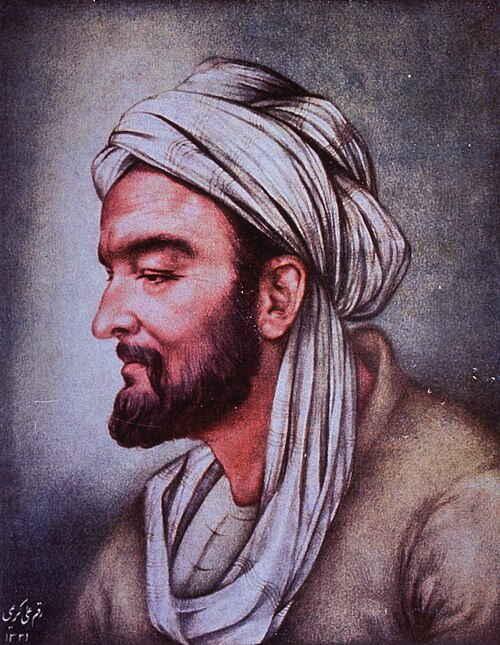
Ibn Sina was born around 980 CE in a small village called Afshana, near the city of Bukhara (in modern-day Uzbekistan). His father was a government official, and his mother was from the city. When they moved to Bukhara, Ibn Sina was surrounded by books and teachers. He was a fast learner he memorized the entire Qur’an by age 10. By the time he was 16, he had already mastered difficult subjects like math, logic, and even medicine.
Even as a young boy, Ibn Sina showed a mind like no other. By the time he was just 10 years old, he had memorized the entire Quran. His early education covered a lot of ground, including Arabic literature, Islamic law, and math. He eventually began studying logic and philosophy with a tutor named al-Natili. However, Ibn Sina was so bright that he soon knew more than his teacher. He decided to study on his own, diving into the works of famous Greek thinkers like Aristotle and Euclid through Arabic translations. By the age of 16, he had mastered medicine. He famously said that medicine was “not very difficult,” especially compared to the complex logic and math he had already conquered.
The Royal Illness and the Turning Point (c. 997 CE)
Around the age of 17, Ibn Sina’s fame as a healer reached the royal palace. The ruler of the Samanid Empire, Nuh ibn Mansur, had become very sick. The regular court doctors were confused and couldn’t find a cure, so they called for the young Ibn Sina. He was able to figure out the problem and treat the ruler until he was completely healthy again.
The ruler was so happy that he offered Ibn Sina any reward he wanted. Instead of asking for gold, jewelry, or a high-ranking job, Ibn Sina asked for something much more valuable to him permission to use the Royal Library of Bukhara. In those days, books were rare, handwritten treasures, and people weren’t usually allowed to take them out or even enter the library without special permission.
This library was filled with incredible books from all over the world, including translations of Greek, Persian, and Indian works. For a long time, Ibn Sina spent nearly all his time there, reading rare books on science and philosophy that most people never had the chance to see. This access turned him from a gifted student into one of the most knowledgeable scholars in the world.
In his autobiography, which he told to his student Abu Ubayd al-Juzjani, Ibn Sina remembered this time with great wonder. He said he found books there that he had never even heard of before and some he never saw again for the rest of his life. He spent his days and nights reading through the collection, carefully taking notes and organizing the ideas in his head.
Many people later said that he “memorized the whole library.” While he might not have known every single word by heart, it showed how incredible his memory was. He could connect ideas from different books and understand them deeply. By the time he was only 18 years old, he felt he had mastered almost every branch of science and knowledge known at that time. He later remarked that while his understanding became deeper as he got older, the foundation of everything he knew was built during those years in the royal library.
The Library’s Legacy and His Later Life
The time spent in the royal library changed Ibn Sina’s life forever. It gave him the deep knowledge he needed to start writing his own books. Over his lifetime, he wrote about 240 works, though many have been lost over time. Two of his books became world-famous:
- The Book of Healing (Kitāb al-Shifāʾ): Despite its name, this wasn’t just about medicine. It was a massive encyclopedia covering philosophy, logic, and science.
- The Canon of Medicine (Al-Qānūn fī al-ṭibb): This was his most famous medical textbook. It was so well-written and organized that doctors in both Europe and the Islamic world used it as their main reference for hundreds of years.
The decline of the Samanid Empire marked a major shift in Ibn Sina’s life. Around the year 999, the city of Bukhara was captured by the Kara-Khanids. During this time of war and change, the famous royal library was sadly destroyed by fire. Some people even accused Ibn Sina of burning it down so that no one else could access the knowledge he had gained, though most historians believe this was just a jealous rumor.
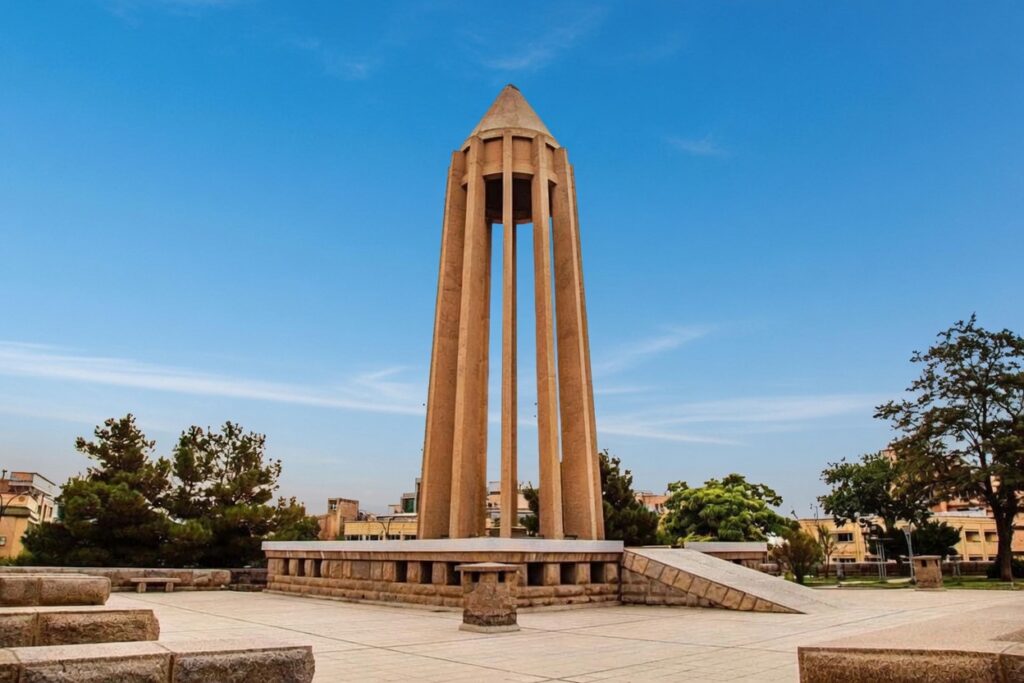
With his home and his favorite library gone, Ibn Sina began a life of traveling. He moved from city to city across modern-day Iran and Uzbekistan, including places like Ray, Isfahan, and Hamadan. Wherever he went, his skills were in high demand; he served different rulers not only as a personal doctor but also as a “vizier,” which is like a high-ranking government advisor. Despite the constant travel and political stress, he never stopped writing and teaching. He eventually died in June 1037, at the age of 57, in the city of Hamadan. He was buried there, and even today, his tomb remains a famous landmark for those who want to honor the “Prince of Physicians.”
A Legacy That Changed the World
The story of Ibn Sina in Bukhara is a perfect example of what made the Islamic Golden Age so special. It was a time when leaders truly valued knowledge and when young people were encouraged to ask big questions. Because a teenager had the skill to heal a king and the curiosity to read every book he could find, the world gained a “Prince of Physicians.”
Ibn Sina’s life shows how powerful it is to combine different ideas. He took ancient Greek philosophy and mixed it with Islamic wisdom, creating a bridge of knowledge that eventually reached Europe and shaped modern science. His books didn’t just stay in the East; they became the foundation for medical schools across the world for hundreds of years.
Today, you can still visit Ibn Sina’s tomb in Hamadan, Iran. He is remembered not just as a doctor or a philosopher, but as a symbol of what can happen when a person never stops learning. The boy who unlocked a royal library ended up unlocking a new era of understanding for all of humanity.

Afshi Speaks is a general interest blog dedicated to exploring the stories, ideas, and topics that shape our world. Our team researches and writes across a wide range of subjects to bring curious readers honest, informative, and engaging content.
Shamiam
May 6, 2026 at 9:46 amIt’s an informative article,would recommend others to read it too