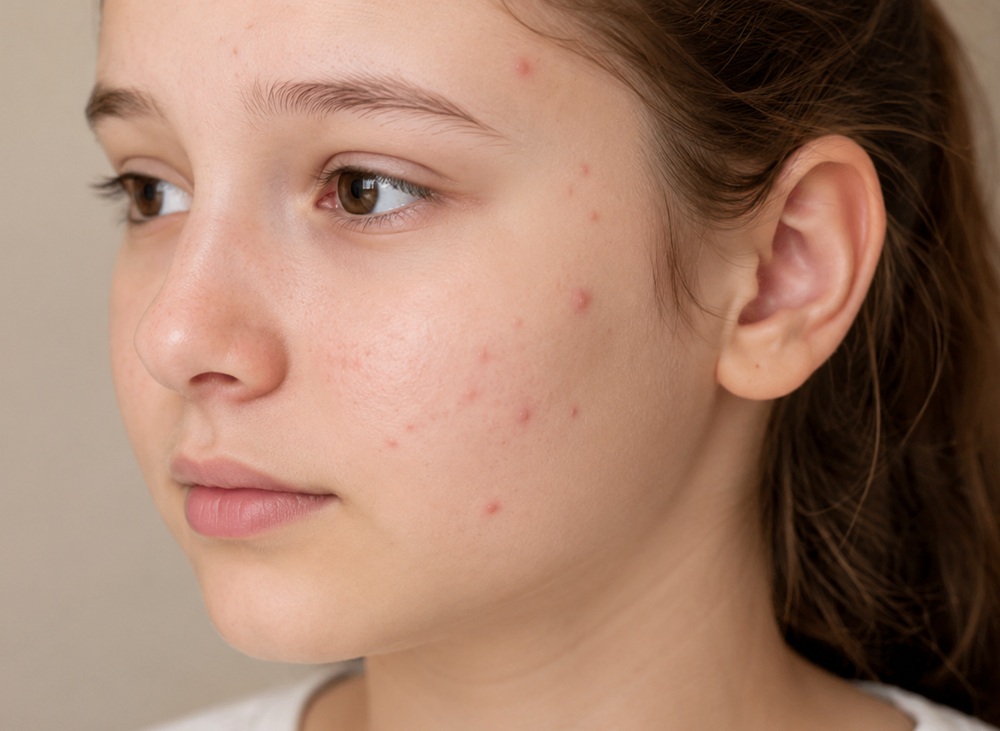
One day, your child has clear skin. Then suddenly, there is a small bump on the forehead, a few blackheads around the nose, or a pimple that seems to have appeared overnight.
For parents, the first question is often: “What happened to her skin?”
Usually, the answer is much simpler than people think. Acne can be one of the early signs that puberty has started. As the body changes, hormones become more active and can make the skin produce more oil. That extra oil can mix with dead skin cells and block pores, creating the perfect conditions for blackheads, whiteheads and pimples.
Why Do Teenage Pimples Appear?
During puberty, hormonal changes can increase oil production in the skin. When extra oil mixes with dead skin cells, pores can become blocked, which can lead to blackheads, whiteheads and pimples.
Why does one teenager get acne while another doesn’t?
This is probably one of the most frustrating things about puberty. Two girls can be the same age, eat similar foods and have completely different skin. One may barely get a pimple, while the other starts getting breakouts every week. It doesn’t necessarily mean one has better hygiene or is doing something wrong.
Genes can influence how likely someone is to develop acne, and everyone’s skin can react differently to the hormonal changes of puberty. Some children simply have oilier skin or pores that become blocked more easily.
So if your tween suddenly develops acne, don’t make her feel that she caused it.
Acne doesn’t mean her face is dirty
This is an important one. Acne is not simply dirt sitting on the skin. Washing harder does not automatically make acne disappear. In fact, aggressive scrubbing can irritate the skin and make things worse. A teens with a few pimples usually doesn’t need a complicated 10-step skincare routine.
Gentle cleansing, simple products and leaving the spots alone can be a much better starting point.
One Thing Parents Often Get Wrong
Acne does not mean a child has dirty skin. Scrubbing harder can irritate the skin instead of helping it. A gentle cleanser and a simple routine are usually a better starting point than aggressive scrubbing.
Why squeezing a tiny pimple can cause a bigger problem
A small pimple may disappear in a few days. But squeezing it can cause more inflammation and sometimes leave a dark mark or even a scar. This can be especially noticeable in children with darker skin, where a pimple may disappear but leave a brown or dark mark behind for weeks or months. So one of the simplest pieces of acne advice is also one of the hardest for a child to follow:
Don’t pick it.
No squeezing in front of the mirror. No scratching. No trying to “pop” every new spot.
What can you actually do at home?
You don’t need to buy every acne product that appears on TikTok or Instagram.
Start with the basics.
Wash the face gently rather than scrubbing it. Choose products that are labelled non-comedogenic, which means they are designed not to clog pores. Keep hair and oily hair products away from the face if breakouts tend to appear around the forehead or hairline. And perhaps most importantly, don’t keep changing products every few days.
Acne treatments often need several weeks before you can properly judge whether they are helping.
A Simple Tween Acne Routine
- Wash the face gently instead of scrubbing.
- Don’t squeeze or pick pimples.
- Choose simple, non-comedogenic skincare products.
- Don’t keep switching products every few days.
- Keep oily hair and hair products away from the forehead when possible.
- Ask a dermatologist if acne becomes painful, widespread or starts leaving scars.
What about chocolate and other foods?
This is where acne advice can become confusing. One person says chocolate causes acne. Another says dairy is the problem. Someone else says all sugar must be avoided.
The actual research is not that simple.
There is some evidence that diets with a high glycemic load may be associated with acne, but current dermatology guidance does not recommend that every child with acne follow a special restrictive diet. So don’t turn a few pimples into a long list of foods your child is suddenly afraid to eat.
A healthy, balanced diet is important for many reasons, but one chocolate bar does not explain every breakout.
When should parents take acne more seriously?
A few pimples around puberty are common. But there is a difference between a few occasional spots and acne that is becoming a real skin problem. If the acne is deep or painful, keeps getting worse, leaves scars or persistent dark marks, or is affecting your child’s confidence, it is worth speaking with a doctor or dermatologist.
You don’t have to wait until the acne becomes severe.
Treating troublesome acne earlier can sometimes help prevent long-lasting scars and marks.
When Should You Get Professional Help?
Talk to a healthcare professional if acne becomes deep, painful or widespread, starts leaving scars or persistent dark marks, or continues getting worse despite a simple and consistent skincare routine.
The good news about teenage acne
Getting the first pimple can feel like a much bigger deal to a child than it might seem to an adult.It can make her want to hide her face, avoid photographs or worry that everyone is looking at her skin.
That’s why the way parents respond matters too.
Instead of saying, “You need to wash your face more,” try explaining that acne can happen because the body is changing during puberty. It isn’t a sign that she is dirty, unhealthy or doing something wrong.
Keep the skincare simple. Don’t let her pick at the spots. Watch whether the acne is getting worse, and get professional advice when necessary. Most importantly, don’t make acne a reason for a child to feel bad about herself. Those first pimples may be annoying, but they are often just one small part of growing up.
References
- American Academy of Dermatology — Updated Guidelines for Acne Management
- American Academy of Dermatology — Acne Overview
- American Academy of Dermatology — Acne Diagnosis and Treatment
- American Academy of Dermatology — How to Treat Acne
- American Academy of Dermatology — Treating Acne Early
- NICE — Acne Vulgaris: Management

Afshi Speaks is a general interest blog dedicated to exploring the stories, ideas, and topics that shape our world. Our team researches and writes across a wide range of subjects to bring curious readers honest, informative, and engaging content.

Leave a Reply